

On the evening of August 9th 1931, leading figures from the French political, military and colonial elites gathered in the main hall of the Palais de la Porte Dorée eastern Paris to mark the closure of Veterans’ Weekend of the International Colonial Exhibition. After the speeches from the usual French dignitaries, the floor was briefly given over to members of the various delegations of veterans from the French colonies. The toast made by Fataroma Karaossi, representing veterans from French colonies in West and Equatorial Africa, was short and hued strictly to the rhetorics of loyalty and gratitude that underpinned the whole event. His praise of ‘the benefits France brought’ and promise that he and his ‘comrades would be ready to defend France, our dear mother if she is attacked again’, likely delighted colonial officials and the exhibition’s organisers. This was not a forum where either the shortcomings of postwar provision for veterans in the colonies or broader critiques of the discriminatory and violent nature of colonial rule were ever likely to be aired. It was a site for the performance of imperial loyalty and the embodiment of the ‘civilizing mission’.
The mise en scène of Fataroma Karaossi’s imperial loyalty points to an aspect of the Exhibition’s portrayal of empire that has been somewhat overshadowed in recent public discourse, if not scholarship, that has rightly focused on the dark and previously understudied history of the display of human beings from the colonies in so-called ‘villages indigènes’. In the great narrative of French colonial rule promoted by the Exhibition, the colonial veteran was one of the counterpoints to the ‘noble savage’ portrayed in the supposedly ethnographic living displays of subject populations that were a key attraction for visitors. Veterans embodied a rupture with the chronopolitics of ‘backwardness’ that defined the ‘native’ in the ethnographic gaze but one that served to reinforce, not undermine, the imperial polity. Unlike their equivalents in the ‘villages indigènes’ 500 metres down the road, delegates from across the empire- Algeria, Morocco, Tunisia, Madagascar, Guadeloupe, as well as West Africa- were given an opportunity to speak for themselves in a public forum but their self-representation took place strictly within the bounds of a language of imperial loyalty that left no space for critique or claims-making. Nevertheless, the symbolic capital veterancy conferred on them and their role as central figures in the French narrative of imperial loyalty insulated them from the harsh conditions endured by their colonial brethren who were put on display in the ‘villages indigènes’. Their status as veterans afforded them a racially-bounded form of dignity and respect and allowed them to stake a claim to being the privileged intermediaries of imperial rule.
In this blog piece, I explore the previously neglected Veterans’ Weekend in the programming of the International Colonial Exhibition of 1931, shedding some light on its organisation, its goals and its contradictions. While more archival research is needed to uncover how the delegates were chosen, the conditions of their transportation to and their stay in France, press sources offer some insight into the official narratives that surrounded their participation in the exhibition, some of the critique it elicited and some of the controversy that emerged in connection to it.
The Great War and the Colonial Exhibition
Given the centrality of the First World War both to broader commemorative culture in the interwar French polity and to the evolution and narration of the relationship between metropole and colony in the French empire in this period, it was hardly surprising that veterans would feature in the Colonial Exhibition. Of course, honouring the colonial military was integral to the Exhibition from the outset. The 82m tall Monument des Forces d’Outre-Mer stood at the culminating point of the Great Avenue of the French Colonies and featured a display room dedicated to the colonial military, including their contribution to the Great War.

Figure 1. Pavillon des Forces d’Outremer à l’Exposition Coloniale de Paris en 1931. Editions Brun.
Individual colonies’ pavilions also featured displays on their contributions to the war while the ‘Colonial Garden’ at the Nogent-sur-Marne end of the Bois de Vincennes had, since the 1920s, hosted war memorials to the Indochinese, Madagascan and ‘Black’ soldiers who died in the First World War, underlining the place of the global conflict in the colonial commemorative landscape into which the Exhibition was integrated.

Figure 2: Monument aux soldats noirs morts pour la France, Jardin d’agronomie tropicale de Paris.Wikipedia CC.
The legacies of the war were also a focal point for critics of the Exhibition. While broader critiques of the Exhibition frequently evoked the colonial war dead, it was the newspaper of the Communist-affiliated Association Républicaine des Anciens Combattants that most explicitly articulated its attack in terms of veteran policy. In an article that coincided with the opening of the Exhibition in May 1931, the columnist Presset urged veterans not to ‘allow themselves be taken in by this alluring and gaudy imperialist fair’ which he affirmed occulted the ‘stains of blood and all the crimes of colonialism’ that underpinned the empire. Instead, he stressed the need ‘not to ignore the unhappy conditions repeatedly highlighted by native veterans and victims of war in the colonies who are subject to treatment that is both scandalous and criminal when it comes to pensions’. The article went on to detail the many inequalities and inadequacies that defined veteran provision in the interwar period and expressed the hope that the ‘colonial masquerade at Vincennes’ would rally veterans in France behind the campaign to secure ‘equal rights for all’. This was not to be.
Veterans’ Weekend at the Colonial Exhibition
Instead, the Exhibition would serve to promote the image of veterans as loyal servants of the Empire. The Exhibition’s organiser-in-chief, Marshall Lyautey, who had an extensive history of military and administrative experience in the colonies and had written widely on the role of soldiers and veterans in society, was eager to enlist veterans to support the project. He charged the retired admiral Georges Dumesnil with organising the participation of veterans from across the empire in the Exhibition. Dumesnil headed up the Federation for Veterans Living Outside of France, whose membership was made up of French citizens who were resident outside of the metropole, but he engaged with the Ministry of Pensions and the Ministry of the Colonies to ensure representation (and the right kind of delegates) could be secured from among the empire’s large population of colonial veterans. The expert committee over which he presided included no colonial subjects. It set about organising the series of public activities that would showcase both the loyalty of colonial veterans to the imperial polity and the empire’s supposed generosity to those who had served in its defence.
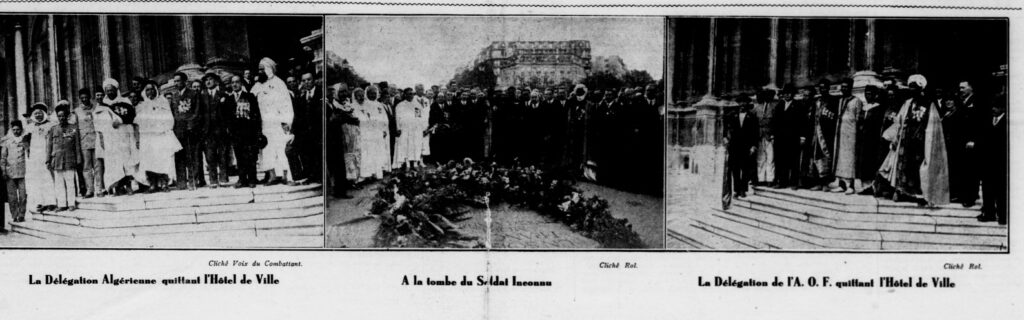
Figure 4: Visit to City Hall and the Tomb of the Unknown Soldier by Algerian and West African Veteran Delegations, La Voix du Combattant, 15/08/1931.
Press coverage of the veterans’ delegations focused primarily on the publicly choreographed performances of commemoration and loyalty that were concentrated on Sunday August 19th. The day began with a reception at City Hall in honour of both colonial veterans and French veterans living overseas, before the delegations were transferred by bus for a march down the Champs-Elysées on to the traditional lighting of the remembrance flame at the Tomb of the Unknown Soldier. The newspaper of the Union Nationale des Combattants, the major conservative veterans’ organisation in France, covered the day’s events with the combination of breathless enthusiasm and unyielding exoticism that was typical of reports on the Colonial Exhibition. While the paper’s editorialist waxed lyrical about a parade that was ‘simultaneously a resurrection of the visit of the Magi and an Oriental dream’, the main report revelled in the ‘picturesque scene’ presented by ‘the most beautiful varieties of costumes and of races’. Here the exoticising ethnographic language of the Exhibition was readily applied to the veterans who had once fought to defend France.
If references to imperial fraternity and dashes of Orientalism peppered the speeches of the French dignitaries who addressed the ‘solemn session’ of Veterans’ Weekend, colonial veterans are mostly notable for their marginality to the substantive discussions. It was, after all, a meeting organised by and for the Federation of Veterans Living Outside of France, an organisation that did not include colonial subjects. For the veteran leaders and government officials who addressed the meeting, the main concern was the fate of French citizen veterans in the empire and abroad, not subject veterans. Admiral Dumesnil’s speech focused solely on citizen veterans living outside of the metropole, with no mention of colonial subject veterans. While the Minister of Pensions, waxed lyrical about the diversity of veterans gathered in Paris for the occasion of the Exhibition, affirming that ‘the whole family is here’, he made no specific mention of the plight of subject veterans. Henry Rossignol, leader of the Union Nationale des Combattants, was the only speaker to mention, in passing, conditions for subject veterans, affirming that ‘while their needs may be different, the only limit to the love we give them is our perseverance in ensuring their requests are satisfied’. He dedicated far more of his address to discussing settlement schemes for veterans in North Africa and New Caledonia, affirming that ‘having given everything to saving their country, veterans have a vocation to make French civilisation radiate throughout our colonial empire and beyond’. The lived realities of subject veterans and any claims they might want to advance were of little interest- their presence was, for the organisers of the Veterans’ Weekend, purely symbolic.
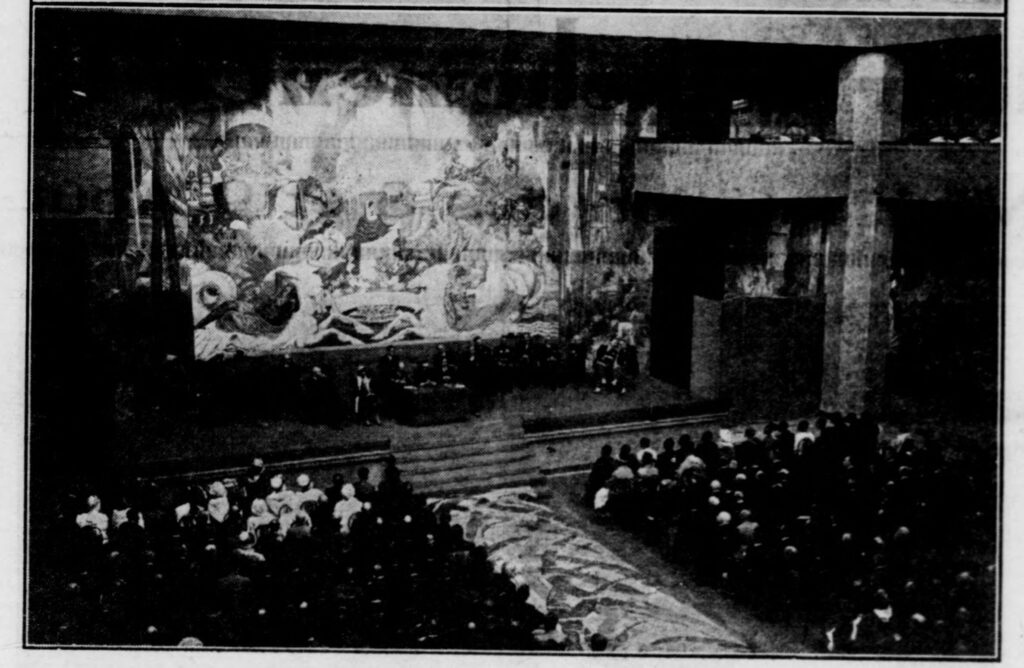
Figure 5: The Closing Banquet of Veterans’ Weekend at the Palais de la Porte Dorée, La Voix du Combattant, 15/08/1931.
This symbolism reached its high-point in the closing banquet on the evening of Sunday August 9th, the one moment where the public actually heard from colonial veterans themselves. The banquet, staged in the presence of dignitaries including the President of the French Republic and the Sultan of Morocco, took place in the Great Hall of the Palais de la Porte Dorée, a room decorated with exoticised portrayals of the colonies and celebrations of France’s “civilizing mission”. In his address, the organiser of Veterans’ Weekend, Admiral Dumesnil, claimed to speak ‘in the name of native veterans who fought at our side to defend French soil and who soaked it with their blood’. Those ‘native veterans’ were allowed speak for themselves only when it came to toasting the President of the Republic, limiting the scope and length of their interventions.
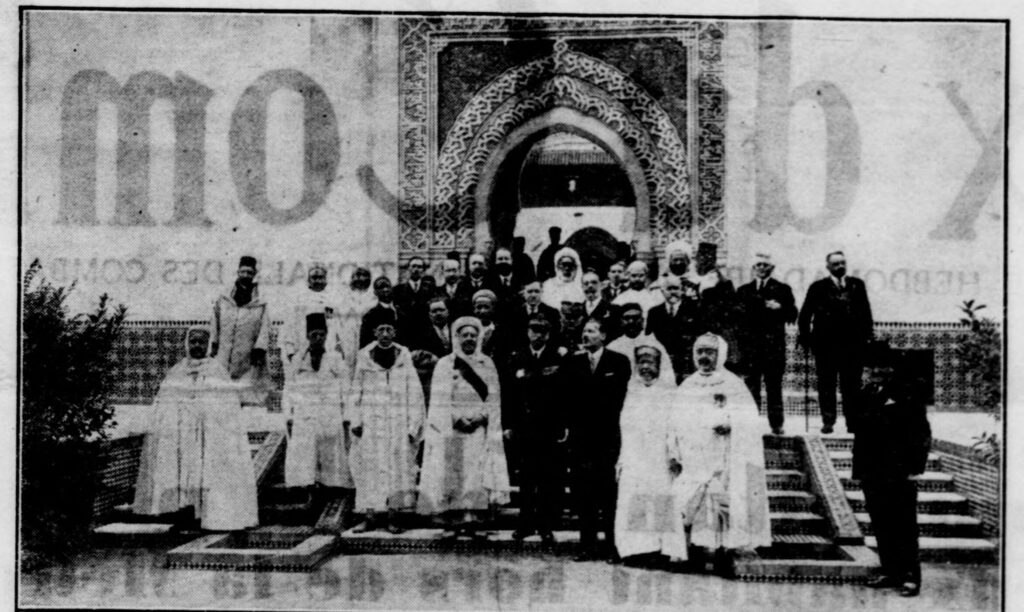
Figure 6: North African Veterans, included Si Kaddour Ben Ghabrit (first on the left in the Front Row) next to Admiral Dumesnil. The Tunisian delegate Ali Bregui is the last on the right in the front row. La Voix du Combattant, 15/08/1931.
The first to take the floor was a well known figure in French colonial circles who had served as a diplomat, interpreter, administrator and all around intermediary for the French Empire, Si Kaddour ben Ghabrit. A key figure in the French efforts to court Emir Hussein during the First World War, he subsequently led the construction and administration of the Grand Mosque of Paris. The Mosque was presented as a memorial to the Muslims who died in defence of France during the First World War but operated largely as a tool of colonial discipline and power for the control of migrants from North Africa. Ben Ghabrit’s speech focused on the alliance between the Sultan and France, of which he was an important facilitator, framing Moroccan wartime sacrifices as a form of gratitude towards ‘the great country that brought us the benefits of civilisation’ and promising that Moroccans would come to France’s defence in any future conflict. The Algerian delegate, Trebec Messaoud stressed Algeria’s special place in the imperial polity, recalling the previous year’s Centenary of the French Conquest, while echoing the expressions of gratitude and future loyalty made by Ben Ghabrit. The Tunisian delegate, a caïd or local colonially-appointed chief, Ali Bregui expressed his happiness at being present for a ceremony that he claimed ‘honoured all those, without distinction of religion or race, who contributed to the victory’. Fataroma Karaossi’s toast embraced the same themes, affirming that ‘France had brought her benefits to the most distant of our villages’ while Randria, speaking on behalf of Madagascan veterans evoked a Malagasy idiom to express a sense of mutual respect and love between subject ex-soldiers and the imperial polity they served. The final colonial speaker, the Guadeloupean veteran Malimure, was keen to stress the particular proximity between the citizen veterans of the ‘old colonies’ and their comrades in France, making an implicit plea for equality between veterans in the metropole and those in territories that ‘for more than 300 years have been bound to France by flesh and blood’. While each speaker encoded their toasts in references specific to their colonies of origin, they all engaged in a performance of imperial loyalty that sought to valorise past sacrifice, gain recognition through the celebration of the colonial ‘civilizing mission’ and accrue capital through promises of future loyalty.
The Kanak Controversy
For one of the colonial attendees at the banquet, however, basic dignity was too much to aspire during the Colonial Exhibition, let alone the acquisition of symbolic capital. A Kanak from New Caledonia who was present that evening and had fought at the Chemin des Dames soon found himself embroiled one of the biggest controversies surrounding the Exhibition. Along with one other veteran, he was part of a group of Kanaks who were recruited to travel to Paris on the basis that they would participate in the Exhibition. The recruiters, a group of former colonial officials, explicitly encouraged Kanaks to take part as a means to refute negative portrayals common in French culture of the native populations as cannibals and savages. In reality, they had no affiliation with the Exhibition and Maréchal Lyauytey refused to approve a display of Kanaks organised without his imprimatur. There was a significant disparity between the oral agreements that secured the recruits and the contracts that were signed on their behalf and typically without their consent. On arrival, they were contracted out to perform in a degrading variety show in the Jardin d’Acclimatation in Western Paris, with some of their number sent to Germany to perform as ‘French cannibals’. Although most of the recruits were literate and had a familiarity with French culture, having passed through missionary schools and/or the Army, they were required to embody the visions of backwardness and savagery that the audiences of these kinds of shows expected from colonial subjects. The promotional material for the show centred practices of cannibalism while the mise en scène, which including having the Kanaks perform alongside exotic wildlife, undermined their humanity. This was a far cry from the limited paternalistic recognition of the dignity, if not the agency, of colonial veterans during Veterans’ Weekend.
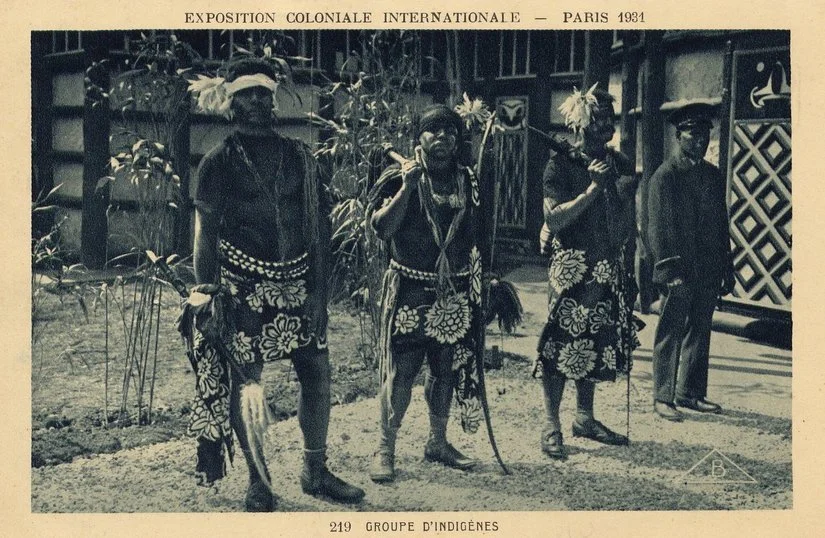
Figure 7: Kanaks at the Colonial Exhibition where the anthropological gaze shaped their representation but distinguished it from the sensationalised representations of the Jardin d’Acclimatation.
The fate of this delegation of Kanaks provoked consternation among colonial officials who saw the indignity of their living and working conditions as undercutting the scientific and civilisational bent of the Colonial Exhibition and its own living display of colonized subjects. The organisers of the Exhibition had drawn a clear distinction between their “scientific” displays of “natives” and older practices of display of “savages” for the entertainment of the public. The fact that veterans were among the Kanak enrolled in the show was particularly alarming, a clear breach of the moral economy of wartime sacrifice. It was even more aggravating that some were sent to Germany, where they were deployed to reinforce German discourses about the savagery of French colonial troops. Leftwing critics seized on the case as exemplary of the abusive nature of colonial rule and the exploitation at the heart of exhibition culture. The Kanaks themselves were active participants in these conversation. While Johann Le Guelte has convincingly argued that their performances in these shows involved ‘paradoxical acts of resistance’ that subvert French narratives and staked a claim to their own agency, they also overtly critiqued their living and working conditions. The veteran and local chief Wathio Graviné, who had helped initially recruit his fellow Kanaks, published a letter in the left-leaning l’Oeuvre denouncing the treatment of the Kanaks in Hamburg where they were ‘like slaves…We have to dance non stop or dig out large tree trunks in the rain to make canoes’. The humiliation of this veteran at the hands of the Germans fed outrage around the broader treatment of the Kanaks. Ultimately, the Kanaks in Germany engaged in a strike, refusing to continue to perform and demanding their return to Paris, leading to an intervention on their behalf by the French consul.
It fell to one of the most prominent figures associated with the colonial war effort, the Senegalese Deputy, once High Commissioner for the Republic then Under-Secretary for the Colonies, Blaise Diagne to bring this sorry chapter to a close. After the receipt of petitions from the Kanaks and from rights organisaitons, he ordered the closure of the exhibition at the Jardin d’Acclimataion and the repatriation of the participants to New Caledonia as soon as possible. Most of those recruited boarded a ship in Marseille on the symbolic date of November 11 1931, returning home to New Caledonia and to lives in their communities that remained subject to the coercive control of the colonial regime.
Conclusion
The experiences of colonial veterans at the International Exhibition underlines the extent to which veterans came to embody the ‘tensions of empire’ in a changing interwar French empire. While the symbolic capital accrued through wartime service often imbued them with new entitlements and new dignity in the eyes of the colonial authorities this did not equate to freedom to challenge the shortcomings, let alone the inherent injustices of the colonial system. Some veterans benefitted from this shift, positioning themselves as favoured intermediaries of the regime, reproducing and readapting its favoured scripts in performances of imperial loyalty that enhanced their own positions in the imperial polity. But as the fate of the Kanak veterans underline, veterancy did not automatically insulate subjects from the exploitation and coercion that underpinned colonial rule. This chimes with the experiences of thousands of veterans across the empire who found the new rights extended them in the wake of the war were often worth little more than the paper they were written on. For the French imperial state, the mise en scene of imperial loyalty through symbolic recognition of veterans at events like the Exhibition was often more important and less costly than establishing real regimes of reciprocity with ex-soldiers and their families across the empire.
Selected Bibliography
French Historical Studies (2024) 47 (3): 429–452.