
When we recount the sweeping global history of the First World War, our collective memory is often dominated by the staggering statistics of the battlefield: the millions of artillery shells fired, the miles of trenches dug across Europe, and the incomprehensible loss of human life. However, when the armistice was finally signed and the guns fell silent in 1918, a new, quieter, and far more protracted battle began. This was a war fought not with bullets, but with memorandums, draft letters, petitions, and rigid administrative regulations. It was waged in the sterile halls of imperial bureaucracy, and its primary combatants were the thousands of Indian widows left behind by the men who sacrificed their lives for the British Empire.
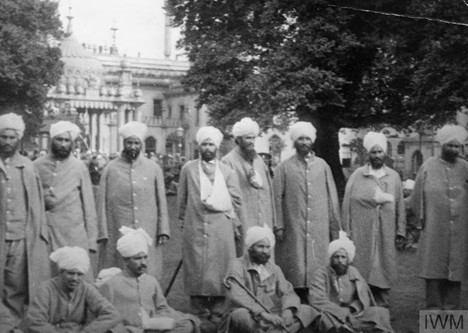
Fig.1 Indian soldiers in the Royal Pavillion in Brighton which was converted into a hospital for the wounded soldiers
As I delved into the declassified files of the Military Department from 1918 to the 1930s at the Uttar Pradesh State Archive in Lucknow, the National Archives at Delhi and Kew, U.K., and the records held at the British Library in London, another story emerged that hasn’t been so widely explored in the historiography of the First World War. One that talks of the “legacy of this experience” [1] on the wider community of people who were impacted by the war, the families of the fallen soldiers, particularly their widows. For these women, navigating their grief meant fighting a legal and financial system that fundamentally misunderstood their culture, their familial structures, and their daily survival.
A major grievance raised repeatedly during this era was the strict imposition of “time-bars” on pension applications [2]. According to the military files, harsh orders were issued declaring that claims for Indian personnel for Great War disability and family pensions would only be received up to August 31, 1928, or the seventh anniversary of an individual’s discharge. The official, rather cynical justification for this strict time limit was the fear that, in the absence of such a rule, “abuses might be encouraged and persons with doubtful claims might deliberately postpone putting them forward”. This was in line with the British War Pensions Act, 1921, that a disability pension cannot be granted to a person unless the claim was made within seven years after the date on which the claimant was discharged or the date fixed under the termination of the Present War (Definition) Act, 1918 as the date of the termination of the war, or whichever date is earlier. But such a time limit was particularly harsh for the soldiers and their families in India, who remained largely unaware of these rules due to their unique circumstances, which were discussed quite emphatically during the Legislative Assembly Debate that took place on February 15, 1933.
Advocates for the soldiers and their widows pointed out a glaring flaw in the Government’s logic: Even if the soldiers and their families were given ample warnings about the time limits, they had likely not reached the largely illiterate and impoverished families living in the rural districts of India. Furthermore, the Assembly formally recognized that “the soldiers, when they were enlisted, were not given any warning as to the possibility of the imposition of a time-limit on their claims”. Punishing a grieving widow in a remote village for failing to read a bureaucratic notice issued in London or Simla was an abdication of the Empire’s duty.
Even if a widow or a severely disabled soldier somehow managed to submit a claim on time, they faced the immense, often insurmountable hurdle of proving “attributability”. A medical board—acting as the “final arbiter”—had to certify that the death or injury was explicitly “contracted on field or foreign service during the Great War”. The government frequently used a highly restrictive interpretation of this rule to reject claims, placing the heavy burden of proof entirely on uneducated ex-sepoys and grieving families.
If a soldier died of a disease years after returning home, the family had to somehow produce medical records and definitively prove the illness originated in the trenches of France or Mesopotamia. Assembly members decried this cruel practice. The War Pensions Committee, also referred to as the Informal Committee on War Pensions, was specifically formed to address the pensions of Indian soldiers. It was a direct result of the debate and a resolution brought before the Indian Legislative Assembly seeking an enquiry specifically into the widespread discontent among discharged Indian ranks and the widows and dependents of the “sons of India,” who had sacrificed their lives in the war. The committee members argued the government should instead “accept the presumption that all disabilities contracted on field or foreign service during the war were, in fact, ‘attributable to military service’, unless there is sufficient evidence clearly to rebut such a presumption”. In other words, the burden of proof needed to be on the Empire to deny the claim, rather than on the grieving widow to prove it. They argued that the rules of “attributabality” were applied much more harshly on Indian troops compared to their British counterparts. The Government of India refused to establish independent tribunals to hear pleas related to disability pension claims of Indian soldiers, unlike the Pension Appeals Tribunals established in Britain under the War Pensions Act, 1919 and 1920, to address grievances of the British soldiers that dealt with these complaints more fairly. One such story that was raised during this debate was that of the plea of the widow of one Jemadar Pahlad Singh, who developed and eventually perished from asthma that was likely caused by his military service, but due to his widow’s inability to prove her claim, she was denied a disability pension.
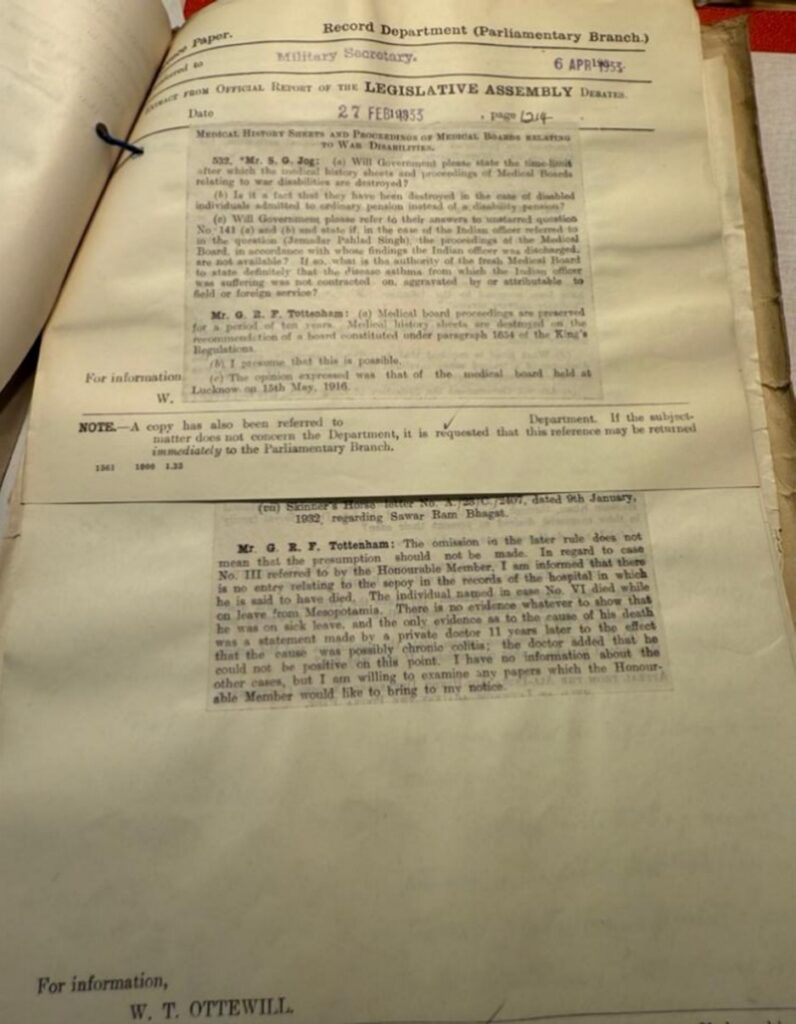
Fig 2. The case of Pahlad Singh being discussed in report on the Legislative Assembly debates.
The sheer frustration over these endless bureaucratic blockades eventually boiled over into righteous anger within the Indian Legislative Assembly. The transcripts of the debate on February 15, 1933, capture the bitter betrayal felt by the Indian representatives. Mr. Muhammad Azhar Ali, moved a resolution to investigate the massive discontent among the widows and dependents of those who gave their lives, pointed out the staggering scale of India’s sacrifice. He noted that out of over a million men deployed, 62,502 were killed, and another 53,365 were listed as missing or prisoners. He contrasted this immense ocean of suffering with the paltry number of people actually receiving relief. He passionately demanded to know what the government expected: “What can any Government expect in future, especially the British Government? God forbid that the time should ever come for another Great War. But, if such a time comes, how can India come to the rescue of the European countries or the mighty British Empire?” Other members echoed his deep outrage, pointing out that the government was hiding behind technicalities while families starved. Mr. Gaya Prasad Singh noted that these vulnerable families were being barred by mere limitations that were “a matter of rules,” pleading with the chamber, “Is this not a matter of conscience?” [3]
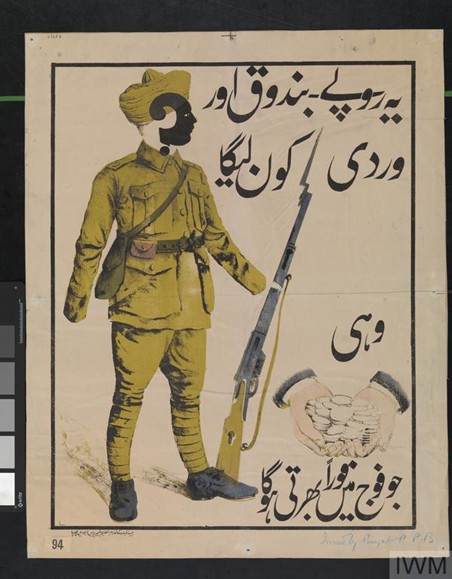
Fig. 3 A poster circulated during the First World War to recruit Indian soldiers
Behind the scenes, however, the internal departmental minutes reveal a highly clinical, detached approach to these passionate pleas. The files are filled with endless, dry debates between the India Office, the War Office, and the Military Department over who would actually foot the bill. Lengthy memorandums (such as the infamous “Memorandum C”) were drafted purely to determine the liability for casualty awards, dividing the financial burden between Indian revenues and Imperial funds based on the precise date a grant had come to effect.
In these internal files, one note from the Military Secretary dismissively refers to the War Pensions Committee as “rather irresponsible” for putting the Government of India into a position of difficulty by accepting their empathetic recommendations. Draft letters and minute papers from the Military Department confirm that the Secretary of State in Council sanctioned the proposal to accept some of these recommendations, allowing it to take effect from December 27, 1934. Another internal memo coldly notes that the government should “wait and simply charge them to the War Office when they fall due, leaving the War Office to raise any objections”. The contrast between the emotional devastation of the Indian families and the calculated penny-pinching of the imperial accountants could not be starker.
Again, at the very heart of this bureaucratic conflict was also a profound clash between rigid Western administrative rules and the complex social fabric of the Indian subcontinent. The way the British Imperial Government chose to distribute—and often withhold—widow pensions reveals a fundamental ignorance of how Indian families functioned. Until 1918, the rule governing the families of deceased Indian soldiers was relatively straightforward: a pension granted to the widow of an Indian soldier was “continued for life and was not determined on remarriage”. However, this vital lifeline was abruptly altered by the British Secretary of State when it was declared that their pension will be forfeited on remarriage. The official justification for stripping a widow of her pension upon remarriage was based on the Western assumption that if a widow remarried, her children might be left entirely without support.
What the Imperial government failed to grasp was the deeply entrenched reality of the Indian joint family system. In many Indian communities, it was entirely customary for a widow to remarry a member of her deceased husband’s family—most often his brother. Engaging in this customary remarriage, the widow remained entirely within the same family circle. In several correspondences with higher officials in London, we can see local representatives explaining the family dynamics in Indian communities, urging their superiors to reconsider stripping the widow of her pension for adhering to her cultural safety net, as it not only meant a devastating financial blow for the widow, but an unnecessary punishment that harmed the very children the British claimed they wanted to protect.
The War Pensions Committee finally recognized this glaring flaw and recommended that a widow’s pension should not be forfeited if she married her brother-in-law. However, the military bureaucracy attached a highly precarious catch to this concession: she could only keep the money “provided that she continued to live a communal life with the other eligible heirs”. This single, seemingly innocuous phrase became a dangerous bureaucratic trap. Imperial administrators interpreted this rule to mean that the pension should remain in payment only so long as another eligible heir existed in the household. If the last “eligible heir”—perhaps an aging father-in-law or a frail mother-in-law—happened to pass away or become disqualified, the government took that to mean the widow’s pension should immediately cease.
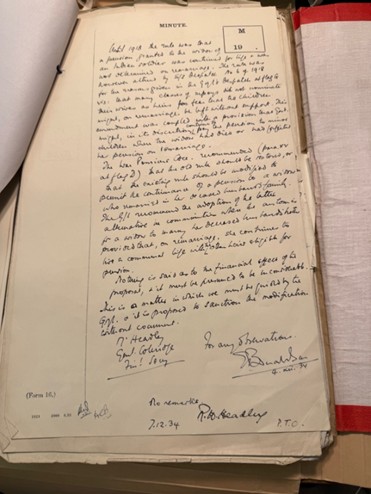
Fig 4. A letter to the army department from the Government of India to sanction the War Prisons Committee recommendation for pension for a remarried widow without comment.
It took fierce and sustained pushback from the Government of India to challenge this deeply unfair and illogical interpretation. In a November 1935 dispatch, they argued forcefully that “it would neither be reasonable, nor justifiable on grounds of equity, to withhold a family pension from a remarried widow, merely because the last eligible heir had died or became otherwise disqualified”. They demanded that a widow’s entitlement to her own survival should not be entirely dependent on the mere existence of another heir. Furthermore, they insisted that this concession must apply to all communities equally, noting that the “joint family system is in vogue” across the region and no racial or caste distinction should limit this relief.
The true weight of these bureaucratic hurdles is best understood not through the clinical language of official memorandums, but through the desperate situations of individual families. During the debate in the Indian Legislative Assembly, Honorary Captain Rao Bahadur Chaudhri Lal Chand brought forward a heartbreaking case that highlighted exactly how precarious a military family’s lifeline truly was. Chand recounted the story of an Indian Jemadar who was tragically killed in the field of battle. The fallen soldier left behind an incredibly vulnerable household: an aging father, an aging mother, a grieving widow, and four young daughters—the eldest of whom was only eight years old, with the youngest being just five or six months old. Initially, the system appeared to work as intended. The grieving widow was granted a military pension to support her large, dependent family.
But tragedy soon struck the family a second time. Just five or six months after the Jemadar was killed in action, his widow also passed away. Her untimely death left the four little girls and their elderly grandparents entirely without financial support. When local advocates attempted to transfer the financial relief to the surviving children, they slammed into a massive bureaucratic wall. The rigid imperial rules dictated that because the widow “did not die within certain months,” the children were not legally allowed to inherit the pension.
The family was plunged into destitution due to a mere technicality regarding the timeline of the mother’s death. It was only after this specific case was strongly escalated to the Punjab Government and subsequently pushed to Army Headquarters that the military bureaucracy finally relented. Recognizing the horrifying optics and the severe hardship, they treated it as a “special case” outside the standard regulations. They eventually granted the family a lump sum of 8,000 rupees, ensuring that the four orphaned daughters would have provisions for their immediate survival and future marriages.
While this specific story had a somewhat mitigated ending, it stands in the archival record as a stark reminder of the countless families who did not have anyone to advocate for them in the Legislative Assembly. One is left to wonder how many thousands of other orphans and widows quietly starved because they missed an arbitrary deadline by a few weeks or months.
Today, as we look back at archival files bearing sterile titles like “Military Department Collection No. 268,” they initially look like nothing more than a testament to administrative pedantry. They are filled with crossed-out drafts, stamped approvals, and complex legal jargon about “mutatis mutandis,” “eligible heirs,” and the financial splits of “Memorandum C”.
But if you read between the lines of the typewritten pages and the handwritten marginalia, these documents map the contours of profound human grief and resilience. They tell the story of the Indian widow desperately trying to maintain her communal life within her joint family without being stripped of her dead husband’s pension. They tell the story of a Jemadar’s four orphaned daughters, whose survival was nearly derailed by a rule about the month of their mother’s death. And they tell the story of local advocates and assembly members who refused to let the Empire forget the solemn promises it made when it sent over a million men to fight a European war.
The bureaucratic war over Indian widow pensions proves that the true cost of global conflict is not just counted on the battlefield. It is counted in the decades of ledgers, legal fights, and legislative debates that follow, as ordinary families demand that their ultimate sacrifices be met with ultimate accountability.
Dr Anindita Bhattacharya is a postdoctoral researcher on the COLVET project. This blog is based on research conducted in archives in London, Lucknow and Delhi.
Endnotes:
[1] Catherine Moriarty, “Review Article: The Material Culture of Great War Remembrance” (1999) 653.
[2] “Report of the Informal Committee on War Pensions,” War Pensions Collection, 1933-36, British Library, London.
[3] “Grant of War Pensions to Indian Soldiers,” War Pensions Collection, 1933-36, British Library, London.